

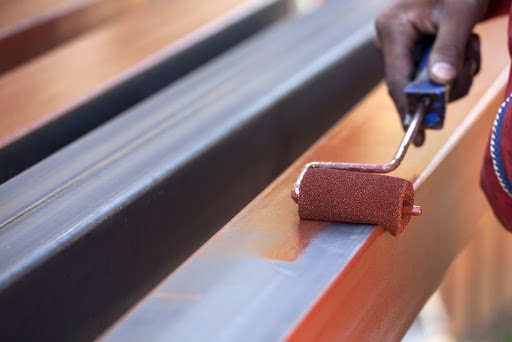
Painting galvanized steel sheets is an excellent way to extend their service life, match architectural color schemes, or provide extra chemical resistance. However, painting bare galvanized metal is notoriously tricky—if you apply standard house paint directly onto new galvanized steel, it will almost certainly flake, bubble, and peel off in sheets within a few months.
Understanding the chemical reasons behind paint failure on zinc—and following the correct surface preparation sequence—ensures a durable bond that lasts for decades.
Why Paint Fails on Galvanized Steel: Saponification
The primary culprit behind paint failure on galvanized sheets is a chemical reaction called saponification.
Zinc Coating + Moisture + Alkyd/Oil Paint Resins
│
▼
Saponification Reaction (Forms Zinc Soap)
│
▼
Loss of Paint Adhesion (Flaking & Peeling)
When oil-based or alkyd paints are applied directly to zinc, the zinc reacts with the oil resins in the presence of moisture to form a slick, slippery film of zinc soap at the interface. This soap breaks the adhesive bond, causing the paint layer to release completely.
Step-by-Step Guide to Painting Galvanized Sheets
To achieve a long-lasting coating bond, contractors must follow a strict four-step prep and application process:
1.1. Degrease & Clean the Surface:Removal of Oils & Storage Passivation.
New galvanized sheets are often treated with mill oils or chromate passivating rinses to prevent “white rust” during shipping. Wash the surface thoroughly using a water-based industrial degreaser or solvent wash, followed by a clean water rinse.
2.2. Etch or Profiling the Zinc:Mechanical Profile or Chemical Etch.
Smooth zinc offers very little mechanical anchor profile for paint. Lightly abrade the surface using a synthetic scouring pad (e.g., Scotch-Brite) or apply a specialized zinc-phosphate chemical etching solution to create micro-texture.
3.3. Apply a Compatible Primer:Essential Bond Layer.
Apply one coat of 100% acrylic latex primer or an epoxy-based tie-coat designed specifically for non-ferrous metals. Never use oil-based or alkyd primers.
4.4. Apply High-Grade Topcoat Paint:Weather-Resistant Topcoat.
Once the primer cures, apply two finish coats of high-grade 100% acrylic exterior latex paint or an industrial polyurethane topcoat for high UV and weather resistance.
Quick Reference: Do’s and Don’ts
|
Recommended Practice (DO) |
Avoid / High Failure Risk (DON’T) |
|
Use 100% Acrylic Latex primers and topcoats |
NEVER use oil-based, alkyd, or oil-modified paints |
|
Allow new galvanized sheets to weather outdoors for 6–12 months if possible |
Paint over fresh mill oils or wet storage stain (“white rust”) |
|
Test paint adhesion on a small hidden spot (cross-hatch test) |
Pressure wash at extreme pressures that damage the zinc layer |
Summary Tip
If you are specifying galvanized roofing sheets for a project that requires immediate color, consider sourcing pre-painted galvanized steel (PPGI) coils directly from the mill. Factory coil-coated sheets undergo automated chemical conversion, primer application, and high-temperature oven curing, yielding superior paint adhesion compared to field-applied coatings.
Aluminium Sheet Kampala Uganga