

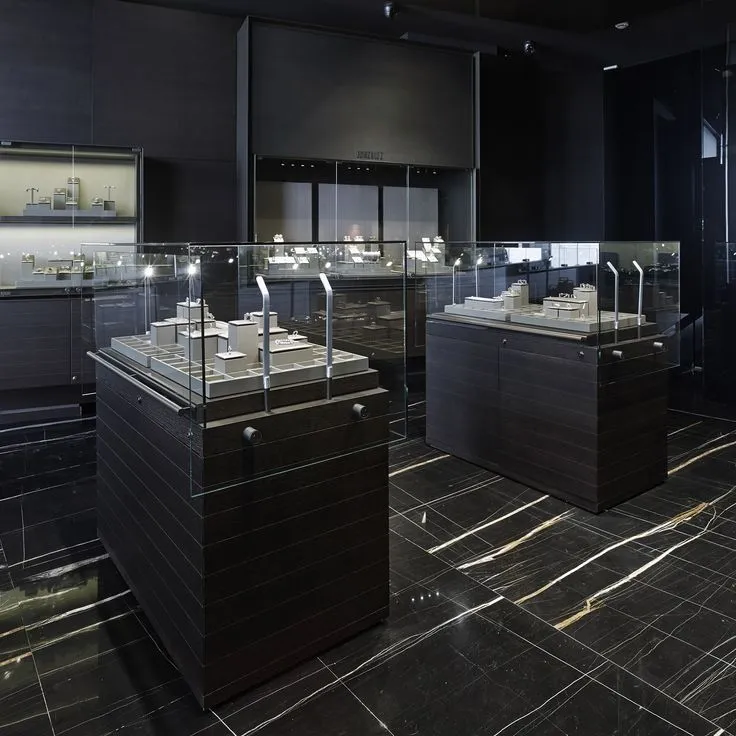
A jewelry showroom depends on presentation. Customers examine small details, compare finishes, and spend time viewing pieces under carefully arranged lighting. Display cabinets naturally attract attention, but the surrounding interior also influences how merchandise appears. Flooring, wall colors, furniture, and reflections can contribute to the overall shopping experience.
A black polished concrete floor may appeal to retailers seeking a contemporary interior with a distinctive visual character. However, darker surfaces introduce considerations involving lighting, maintenance, and contrast. Understanding these details helps showroom owners create a coordinated environment without allowing decorative choices to distract from the jewelry itself.
Dark Floors Create a Visual Foundation
Dark flooring can establish contrast with lighter walls, metallic display fixtures, and illuminated cabinets. This contrast may help define different areas without requiring additional partitions. However, an entirely dark interior can feel visually heavy when lighting and furniture are not balanced appropriately.
Showroom designers should consider how floor color interacts with cabinetry, ceiling finishes, and natural daylight. Physical samples can help demonstrate these relationships before installation. A finish that appears attractive in a small photograph may create a different impression across an entire retail space.
Jewelry Lighting Requires Careful Coordination
Jewelry stores often use focused lighting to highlight gemstones, precious metals, and intricate designs. These fixtures may create bright reflections on nearby surfaces. Floor reflectivity can influence how customers experience the showroom, particularly when display cabinets contain multiple light sources. A highly reflective finish may produce noticeable highlights beneath certain fixtures, while a less reflective surface creates a different visual effect.
Designers should evaluate lighting and flooring together rather than treating them as separate decisions. The goal is to make merchandise clearly visible without introducing unnecessary glare or distracting reflections.
Customer Movement Shapes the Layout
Jewelry shopping often involves slower movement than ordinary retail browsing. Customers may stop at individual cabinets, speak with staff, and spend extended periods comparing products. These activities influence where circulation space is needed.
A practical showroom arrangement should provide:
-
Clear entrances: Allow customers to enter without congestion.
-
Display access: Maintain comfortable viewing space around cabinets.
-
Consultation seating: Position chairs away from primary walkways.
-
Accessible routes: Follow applicable accessibility requirements.
-
Staff movement: Preserve suitable access behind service counters.
These considerations help the floor plan support both customer comfort and everyday business operations.
Existing Concrete Determines Available Options
Some jewelry showrooms occupy converted retail properties where previous flooring has been removed. The exposed concrete may contain adhesive residues, repairs, stains, or other surface variations. These characteristics can influence the appearance and suitability of a proposed finish. Store owners consulting an epoxy flooring company should discuss the existing substrate and intended design before selecting materials.
Polished concrete and decorative epoxy systems are different approaches, with distinct preparation requirements and visual characteristics. Professional assessment can help establish which options are technically appropriate rather than assuming every concrete floor can achieve an identical appearance.
Display Furniture Influences Floor Maintenance
Jewelry cabinets, consultation tables, and seating can concentrate activity in particular sections of a showroom. Some fixtures remain permanently positioned, while others may be rearranged during renovations. Furniture weight, movement, and contact with the surface should be considered when planning the interior.
Suitable protective accessories may help manage contact between furniture and flooring, depending on the selected materials. Store owners should also understand the manufacturer’s recommended cleaning procedures. A visually appealing surface still needs practical maintenance arrangements that fit normal business hours and avoid unnecessary disruption to customers.
Security Features Need Separate Planning
Jewelry showrooms may contain controlled entrances, security equipment, reinforced display cabinets, and other protective features. These installations can influence the floor layout and construction schedule. Security requirements should be established with qualified professionals before permanent finishes are completed.
For example, certain fixtures may require appropriate anchoring or electrical connections. These details should not be improvised after flooring installation. A decorative surface does not provide physical security, but coordinating the construction sequence can reduce unnecessary alterations. Showroom owners should also consider how security arrangements affect customer circulation and accessibility.
Seasonal Displays Require Flexibility
Jewelry retailers may change promotional displays for holidays, special collections, and other commercial events. These changes can involve temporary furniture, lighting adjustments, and different product arrangements. A flexible showroom layout allows displays to evolve without requiring frequent changes to permanent flooring.
Store owners can identify suitable locations for temporary features while keeping important access routes clear. The floor should remain a consistent part of the interior rather than dictate every future merchandising decision. Planning for changing displays can help the showroom accommodate new collections while maintaining its overall visual identity.
Conclusion
A modern jewelry showroom requires careful coordination between flooring, lighting, display furniture, and customer movement. Dark concrete can contribute to a distinctive interior, but its appearance depends on surrounding materials and illumination. Existing substrate conditions, maintenance requirements, and security installations also influence renovation decisions. Retailers exploring options through uniquecoatingsandpolishing.com can consider these factors before selecting permanent finishes. By balancing visual presentation with practical requirements, showroom owners can create an adaptable environment that supports merchandise displays without allowing decorative elements to overshadow the jewelry customers have come to explore.