

Selecting an inspection camera for aircraft maintenance is not about chasing the highest resolution or the longest feature list. The right tool is the one that reliably reaches the inspection zone, produces usable images in real shop conditions, and supports consistent documentation for review and sign off. When the tool does not match the task, teams lose time fighting access, redoing inspections, or debating unclear visuals.
A smart selection process starts with the component, access points, and defect types you need to identify. From there, you can narrow down probe diameter, working length, articulation, optics, lighting, and durability. Many maintenance teams use USA Borescopes as a starting point when comparing options because the catalog spans common aviation inspection needs, from tight access checks to detailed internal documentation.
Start with the inspection task, not the spec sheet
Before comparing products, define what success looks like for your inspection. A scope that performs well in a turbine section might be the wrong fit for a gearbox cavity or a structural bay. The goal is to match the camera to the geometry, viewing angles, and defect visibility requirements of the specific job.
What are you inspecting and what defects matter
Aircraft inspection tasks vary widely, even within the same fleet. Consider what you need to see clearly and what you are trying to confirm or rule out. Common inspection targets include:
- Compressor and turbine blades, vanes, and shrouds
- Combustor liners, fuel nozzles zones, and transition areas
- Bearings, seals, and internal housings
- Gear teeth, splines, and coupling surfaces
- Airframe cavities, corrosion prone areas, and structural joints
- Ducting, drains, and confined system spaces
- Wiring runs where chafing or foreign object presence is a concern
Defects also vary by area. A small crack indication in a hot section demands crisp detail and stable viewing. A corrosion check in a cavity may require wide context views and strong lighting control to avoid shadows that hide pitting or flaking.
What access do you actually have
Access drives everything. Port size, bends, and standoff distance determine whether a probe can even reach the target. If you choose a scope that barely fits or requires excessive force, inspections become slower and riskier.
Map out these access realities before buying:
- Minimum opening diameter and any restrictions at the entry point
- Expected bend radius or turns needed to reach the zone
- Distance from the entry point to the inspection target
- Whether you must look back at a feature or around an obstruction
- Whether the probe needs to hold position without drifting
A scope that is perfect on paper but awkward through real access points will get used less or produce inconsistent results.
Core selection criteria that drive performance
Once the task and access are defined, you can focus on the specifications that actually matter for aircraft maintenance. A few core variables typically determine whether inspections are repeatable and productive.
Diameter, working length, and articulation
Probe diameter should match the tightest part of the access path, not just the opening. Working length should be long enough to reach the target with slack for controlled movement. Too short and you cannot reach. Too long and the probe can become harder to control, especially in complex routing.
Articulation is often the differentiator between getting a view and guessing. In many aircraft components, you need to inspect behind features, look along edges, or confirm the condition of a surface from multiple angles. A probe that can articulate smoothly and hold its angle helps capture stable images and reduces time spent repositioning.
In practical terms, prioritize:
- A diameter that navigates the full path without forcing contact
- A working length that reaches the furthest required zone comfortably
- Articulation that is responsive and easy to control with gloves
- A probe stiffness profile that balances pushability and safe handling
Field of view, depth of field, and focus behavior
Optics can either clarify a defect or turn it into a blurry debate. Field of view affects how much context you see. Depth of field influences how much remains in focus as distances change. Focus behavior matters because aircraft inspection zones often require alternating between close detail and broader context.
Think about your typical viewing distances:
- Close up checks for cracks, edge nicks, and coating distress
- Mid range views to assess overall condition, rubbing, or impact patterns
- Wider context views to orient the inspection and document location
If the optics do not perform well at the distances you use most, you will spend time fighting focus and may miss subtle indicators.
Image quality is more than resolution
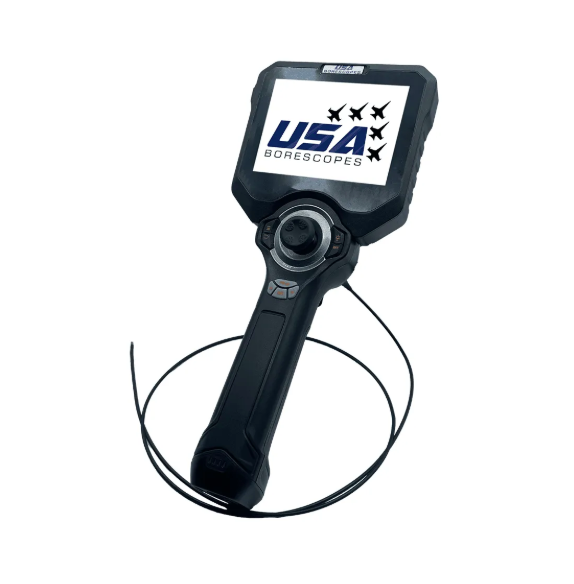
Many teams default to resolution as a proxy for quality, but image usability depends heavily on lighting, glare control, stability, and how the camera handles reflective metallic surfaces. Aviation inspections are full of shiny parts, tight cavities, and complex geometry, so these details matter.
Lighting control and glare management
Lighting is where many inspections succeed or fail. Too much light creates glare and washes out metallic surfaces. Too little light hides texture and depth. Strong lighting control helps reveal true surface condition without misleading hot spots.
Look for a system that can:
- Illuminate tight cavities evenly
- Reduce glare on polished or coated surfaces
- Maintain consistent lighting when the probe angle changes
- Provide usable visuals even when the probe cannot be perfectly centered
In the real world, lighting control often reduces re inspections because the first pass produces evidence that is clear enough for review.
Frame rate and stabilization for usable video
Still images are valuable, but video often tells the full story, especially when you need to show how you reached the finding or how it behaves under different angles. A usable frame rate supports smooth movement without turning the recording into a blur. Stability and responsive controls help technicians capture short clips that reviewers can interpret confidently.
If your workflow includes remote review, quality oversight, or fleet-wide comparisons, prioritize video that remains clear during motion.
Durability, environment, and daily usability
Aircraft maintenance environments are demanding. Tools get transported, handled with gloves, used in awkward positions, and exposed to fluids or contaminants. A scope that is delicate or difficult to set up will not deliver consistent value, even if the image looks great in a controlled demo.
Temperature, fluids, and handling realities
Consider where the scope will be used:
- Hangar versus ramp
- Cold start conditions versus warm engine checks
- Exposure to oils, greases, and cleaning agents
- Storage and transport between locations
Durability is not only about surviving drops. It is also about withstanding day to day handling without degrading image quality or articulation performance.
Ergonomics, battery life, and setup time
A scope that is easy to use gets used more often and with better consistency. Ergonomics matters because technicians may hold the tool for extended periods or operate it in constrained positions. Battery life and quick setup reduce the temptation to skip documentation or rush an inspection.
When evaluating usability, consider:
- How quickly a technician can power up and start recording
- How intuitive the controls are for articulation and lighting
- How easily the display can be viewed in varied lighting
- Whether the system supports efficient file management for reporting
Documentation, measurement, and workflow integration
Documentation is a key benefit of RVI. The right camera supports clear evidence capture, organized storage, and simple transfer into reports or maintenance records.
Some systems also offer measurement features. These can be helpful for certain evaluations, but they are not always necessary and can slow down workflow if they are difficult to use. The best approach is to match features to your actual inspection process.
Practical documentation needs often include:
- Still capture and video recording
- Simple labeling by component and location
- Consistent file formats for sharing and archiving
- Efficient transfer to a computer or reporting system
If multiple teams share the tool, standardize how images are captured and labeled to avoid confusion later.
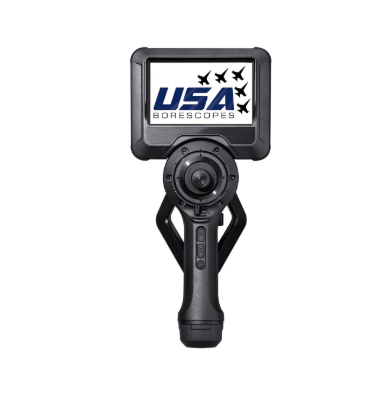
Choosing the right inspection camera for aircraft maintenance starts with defining the inspection targets, access constraints, and defect types you need to identify. From there, the most important factors tend to be probe diameter and length, articulation control, optics that match your viewing distances, and lighting that produces clear visuals on reflective surfaces. Add durability and usability, and you get a tool that technicians will actually use consistently, which is where the real value shows up.
To compare options and match equipment to specific inspection needs, review available solutions at their products page. To learn more about USA Borescopes or to get guidance on selecting the best fit for your aircraft maintenance tasks, contact the team here.
About The Author
The author is an independent aviation inspection technology specialist with hands-on experience evaluating remote visual inspection tools for maintenance teams. They focus on matching equipment to access constraints, documentation requirements, and real world shop conditions to improve inspection repeatability.